Israel has no ocean, but it touches four famous waters: the Mediterranean Sea on the western coast, the Sea of Galilee (a freshwater lake) in the north, the Dead Sea (a salt lake) in the east, and the Red Sea at the southern tip, at Eilat. The Jordan River links the north to the south. Here is what each one is, where it is, and how to visit it.
Israel’s seas and bodies of water at a glance
| Water | What it is | Where | Known for |
|---|---|---|---|
| Mediterranean Sea | A sea, Israel’s western coast | Tel Aviv, Jaffa, Caesarea, Haifa, Akko | Beaches, and harbors from Roman and Crusader times |
| Sea of Galilee (Lake Kinneret) | Freshwater lake | The north, around Tiberias | The shores of Jesus’ ministry, Capernaum, boat rides |
| Dead Sea | Salt lake, the lowest place on dry land | The east, near Masada and En Gedi | Floating in the water, mineral mud, Masada |
| Red Sea (Gulf of Eilat, or Aqaba) | An arm of the Red Sea | The southern tip, Eilat | Coral reefs, snorkeling and diving |
| Jordan River | River | From Mount Hermon through the Sea of Galilee to the Dead Sea | Baptism sites, nature reserves |
Is there an ocean in Israel?
No. The big water to the west is the Mediterranean, a sea that joins the Atlantic Ocean far away, at the Strait of Gibraltar. When people search for the “ocean in Israel” or the “sea of Israel”, they usually mean the Mediterranean coast, with its beaches and ancient ports.
The Mediterranean Sea: Israel’s western coast
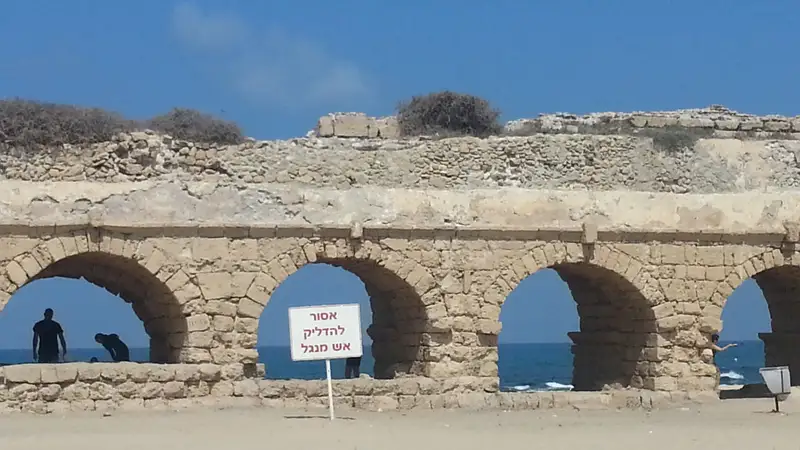
Most of Israel’s people live within an hour of the Mediterranean, and the coast is where the country goes to the beach. Tel Aviv’s promenade, the beaches of Caesarea, Haifa and Akko, and the old port of Jaffa all face the sea. Jaffa is one of the oldest cities in the world, and for 3,000 years it was the main port of the Land of Israel. Caesarea was built by Herod as a harbor city, and Akko was the main port of the Crusaders.
The swimming season runs from about May to October, and the water is warmest in late summer. See it on our Tel Aviv and Jaffa day or on the Mediterranean coast day from Caesarea to Akko.
The Sea of Galilee: a lake with a sea’s name
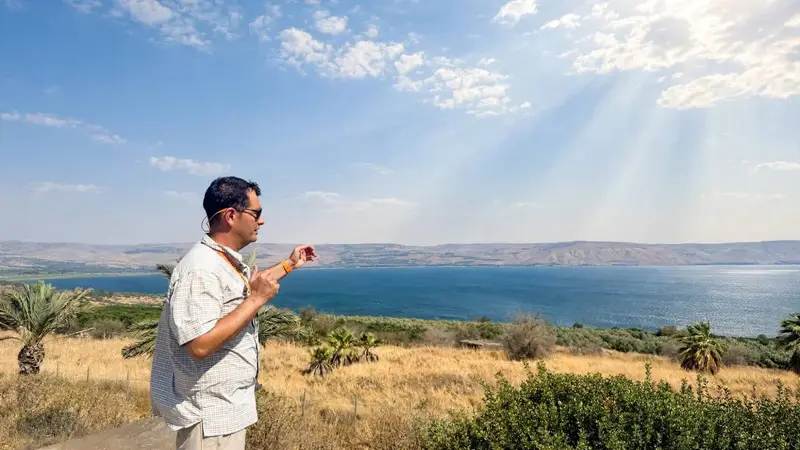
The Sea of Galilee is a freshwater lake, about 21 kilometers long and about 210 meters below sea level, the lowest freshwater lake on Earth. It is called a sea because the Hebrew word yam means both sea and lake. In Hebrew it is Yam Kinneret, in English Lake Kinneret, and it is also known as Lake Tiberias.
For Christian travelers this is the heart of the Gospels: the fishermen Jesus called, the storm he calmed, the Sermon on the Mount, and the towns around the shore. We visit Capernaum, Tabgha and the Mount of Beatitudes, and often take a boat on the water. See it on our Nazareth and the Sea of Galilee day.
The Dead Sea: why is it called a sea, and why dead?
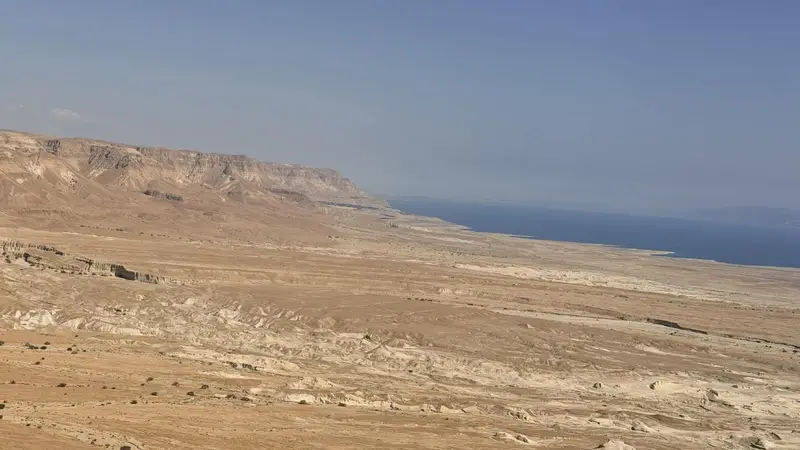
The Dead Sea is a salt lake, about 430 meters below sea level, the lowest place on dry land on Earth. The water is roughly ten times saltier than the ocean, so no fish or plants live in it, which is why it is called dead. It is also why you float without effort. Its Hebrew name is Yam HaMelach, the Salt Sea. The Dead Sea is shared with Jordan and the West Bank, and its level has been dropping by about a meter a year.
A few simple tips: float for no more than 15 minutes, keep the water away from your eyes, do not shave before you go, and rinse in the fresh-water showers afterwards. The Dead Sea is close to Masada, En Gedi and Qumran, so most travelers combine them in one day. See our Masada and the Dead Sea day.
The Red Sea at Eilat
Israel’s only coast on the Red Sea is a short stretch at Eilat, on the Gulf of Eilat, which is also called the Gulf of Aqaba. It is a very different Israel: desert mountains that run straight into warm, clear water, with coral reefs for snorkeling and diving. Eilat is about four hours by road from Jerusalem. We can add it to a longer journey together with the Negev and the Ramon Crater.
Rivers and lakes in Israel: the Jordan and the springs
The Jordan River is the country’s main river. Its sources are the springs near Mount Hermon in the north (Dan, Banias and the Hasbani), and it flows through the Sea of Galilee to the Dead Sea. At Yardenit, where the river leaves the Sea of Galilee, many Christian travelers renew their baptism. The Sea of Galilee is the main lake, and the Hula Valley is a famous stop for birds. The Yarkon River runs through Tel Aviv.
Israel is also a land of springs. Tel Dan and Banias in the north, En Gedi in the desert and Gan HaShlosha near Beit She’an are places where you can walk in clear water, even on a hot day.
Which sea is closest to Jerusalem?
The Dead Sea, about 30 kilometers to the east, roughly an hour by road, down through the Judean Desert. The Mediterranean coast and Tel Aviv are also about an hour away, to the west. That makes Jerusalem a good base for seeing both in one trip.
Questions travelers ask
Which seas does Israel have?
Israel touches four famous waters: the Mediterranean Sea on its western coast, the Sea of Galilee (a freshwater lake) in the north, the Dead Sea (a salt lake) in the east, and the Red Sea at the southern tip, at Eilat on the Gulf of Eilat, also called the Gulf of Aqaba. The Jordan River links the north to the south.
Does Israel have an ocean?
No. Israel has no ocean coast. Its western coast is on the Mediterranean Sea, which joins the Atlantic Ocean far away, at the Strait of Gibraltar.
Is the Sea of Galilee a sea or a lake?
It is a freshwater lake, about 21 kilometers long, and about 210 meters below sea level, the lowest freshwater lake on Earth. It is called a sea because the Hebrew word yam means both sea and lake. Its Hebrew name is Yam Kinneret, in English Lake Kinneret, and it is also called Lake Tiberias.
Why is the Dead Sea called dead?
The water is roughly ten times saltier than the ocean, so no fish or plants live in it. That is why it is called dead. Its Hebrew name is Yam HaMelach, the Salt Sea. It is a salt lake, and the lowest place on dry land on Earth.
Which sea is closest to Jerusalem?
The Dead Sea, about 30 kilometers to the east, roughly an hour by road. The Mediterranean coast and Tel Aviv are also about an hour away, to the west.
What are the main rivers and lakes in Israel?
The Jordan River is the main river, flowing from the springs near Mount Hermon in the north through the Sea of Galilee to the Dead Sea. The Sea of Galilee is the main lake. The Yarkon River runs through Tel Aviv, and springs such as En Gedi, Banias, Tel Dan and Gan HaShlosha are popular places to swim and hike.
Can you swim in these seas?
Yes. There are swimming beaches on the Mediterranean, the Sea of Galilee and the Gulf of Eilat, and public beaches where you can float in the Dead Sea. Swim only at beaches with a lifeguard, and follow the flags and signs.
See the waters of Israel in person. The Mediterranean, the Sea of Galilee and the Dead Sea all fit into a private trip with your own licensed guide. Tell us what you would like to see and we will plan the days around you.